
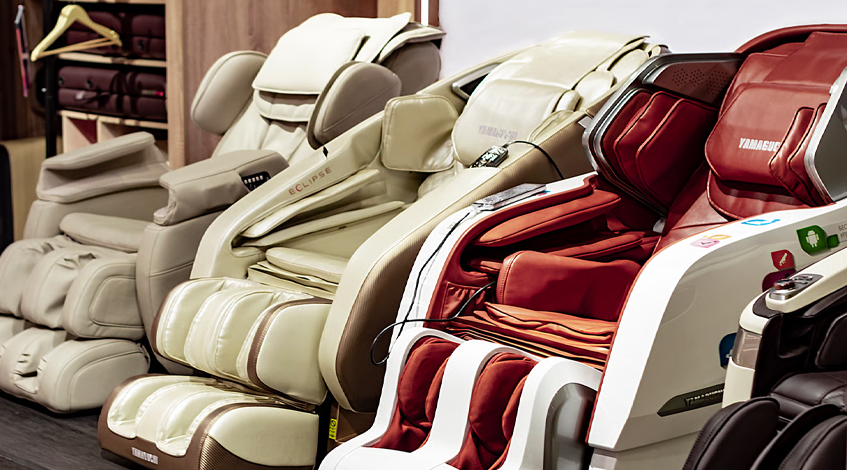
Sit Down, Stress Out, Stand Up Better: The AI Massage Chair Experiment
You spend your entire week accumulated in a state of high physical pressure, racing between professional obligations and family responsibilities without a moment to pause. When your shoulders ache from hours of computer work, traditional methods of relief feel completely out of reach due to packed calendar. You need an automated system that reads your physical data and responds to your exhaustion on demand right in your living room. An empirical look at hoe artificial intelligence transforms everyday relaxation reveals striking results. Discover how a dedicated, data-driven seating system systematically dismantles physical tension, allowing you to step away completely refreshed.
The modern lifestyle demands constant productivity, which inevitably takes a physical toll on the human body. By 2026, the strategy for managing this daily wear and tear has shifted away from static furniture toward responsive, intelligent machinery. To understand the true impact of this shift, consider an experiment: replacing standard evening rest with a structured, automated session inside a connected AI massage chair.
The goal of this experiment is to evaluate how real-time biometric tracking and multi-axis robotics tend to alter physical readiness over a set period. Rather than relying on subjective comfort, modern automated seating uses precise data points to measure muscle resistance and adapts its routines accordingly.
When you introduce a responsive system into your daily routine, you are setting up a controlled environment for personal decompression. The results of this daily practice demonstrate that intelligent hardware doesn’t just offer a place to sit, it actively alters your physical state, ensuring you return to your daily obligations with renewed focus and energy.
Gathering the Baseline: Precise Biometric Body Mapping
The experiment begins the moment you sit down in the chair. A standard piece of furniture remains completely rigid, forcing your spine to conform to its shape, which often increases tension. An AI system avoids this issue by initiating a comprehensive body scan using built-in optical and pressure sensors before any mechanical movement takes place.
The software maps the exact curvature of your spine, determines the shoulder width, and also measures your height to calibrate the internal roller paths. This baseline data ensures that the machinery targets your specific muscle groups with absolute precision. If the rollers move blindly along a preset track, they risk hitting the bone or missing the areas holding maximum tension.
By capturing your exact physical layout every single session, the chair ensures the subsequent routine is safe, efficient, and entirely customized to your frame.
Real-Time Adaptability via Muscle Density Tracking
Once the session underway, the chair doesn’t just follow a static program; it continuously monitors how your body responds to the mechanical pressure. Advanced sensors embedded within the upholstery measure the resistance of your muscle tissues as the rollers move across your back.
If the system encounters an area of intense stiffness or a tight muscle knot, the internal artificial intelligence alters its behavior. It slows down the roller speed and modifies the depth of the pressure, working through the restriction gradually rather than forcing its way over the area.
This real-time feedback loop emulates the responsiveness of a human specialist, preventing the bruising or discomfort associated with older, non-intelligent mechanical recliners. The machine adapts to your body’s changing state throughout the session, maximizing the utility of every movement.
Creating Total Immersion through Smart Room Coordination
Physical decompression involves more than just mechanical muscle work; your environment plays a critical role in how effectively your body can drop its defenses. The AI massage chair acts as a central hub for your smart home network, coordinating with other devices to optimize the room’s atmosphere.
The moment your customized routine activates, the chair sends signals across your home network to prepare the space. The overhead smart lighting dims automatically, motorized window blinds lower to block out distracting outdoor glare, and your climate control shifts to a comfortable, warm temperature.
Built-in high-fidelity speakers integrated into the headrest begin streaming ambient soundscapes directly around you. This total environment synchronization isolates you from household distractions, allowing you to focus entirely on your rest window without any manual effort.
Wearable Integration and Data-Driven Routing
A key component of the AI experiment is how the chair interacts with the data you generate throughout the day. Modern systems feature advanced wireless protocols that sync directly with your personal wearable fitness trackers or smartwatches.
If your wearable device logs prolonged periods of sitting in an office desk or a sudden spike in step activity, it shares these biometric markets with your seating system. When you sit down, the chair analyses the day’s physical history and automatically suggests a routine designed to counteract your specific patterns of immobility or exertion.
For instance, after a long day of desk work, the chair focuses heavily on pelvic alignment, lumbar decompression, and stretching the hip flexors, turning your daily movement metrics into functional physical relief.
Achieving Maximum Spatial and Energy Efficiency
Introducing a powerful relaxation system into your home should not create extra complications regarding floor space or utility bills. Traditional reclining furniture requires several feet of open clearance behind the backrest to tilt backward safely, often forcing you to place the chair in an inconvenient location.
Modern AI chairs solve this problem through zero-wall engineering. As the chair reclines into a zero-gravity orientation, the entire structure slides forward to its base tracks. The architectural design allows the unit to operate ideally while positioned just two inches from the wall behind it. This spatial efficiency ensures you can place the system into a compact home office or bedroom without cluttering your room layout. Additionally, energy-optimized motors keep power consumption minimal, allowing the unit to remain on standby mode without impacting your household’s environmental objectives.
The Long-Term Value of Modular Construction
Sustainability and hassle-free ownership are critical factors when selecting a permanent household asset. The latest generation of intelligent seating moves away from integrated, single-piece internal systems, adopting a highly practical modular construction framework instead.
If a specific sensor, heating element or air valve requires maintenance after years of regular use, an operator can easily swap out that distinct component right in your home. You do not have to worry about packing, shipping, or discarding a massive appliance due to a minor mechanical issue. Furthermore, because the system connects to the cloud, it receives automatic software updates that introduce new movement patterns and relaxation techniques over time. This ensures your hardware continues to perform at a high level as technology advances, protecting your setup for the long term.
Essential Components of an Intelligent Seating System
To replicate the success of this relaxation experiment in your own home, ensure your preferred system includes these critical attributes:
- Dynamic Body Scanning:Software that maps your physical dimensions before every session to ensure precise roller alignment.
- Active Wearable Syncing:The capability to share data with your fitness trackers for automated, data-driven routine selection.
- Multi-Axis Robotics:Agile rollers that adjust speed and depth based on real-time muscle tissue resistance.
- Zero-Wall Mechanics:Space-saving engineering that allows full recline functionality within a minimal room footprint.
- Modular Assembly:A durable construction layout that allows for simple, independent part replacement and automated cloud updates.
Conclusion: Stand Up to a Better Way of Living
The results of the AI massage chair experiment demonstrate a clear conclusion: intelligent furniture fundamentally changes how we recover from daily stress. By combining precise biometric mapping, real-time muscle tracking, and seamless smart home integration, these units offer an individualized level of physical relief that static furniture cannot replicate. They remove the friction of scheduling outside appointments, optimize your limited personal time, and adapt ideally to the needs of every family member.
As you evaluate how to improve your domestic space in 2026, focus on tools that provide proactive, data-driven utility. A truly smart home should actively support your physical readiness and well-being. By choosing a connected, intelligent seating system, you create a personal sanctuary that helps you manage daily tension efficiently, ensuring you always stand up feeling prepared, balanced, and ready for the challenges ahead.